
You saw the organs. This is the body.
Every platform in this series is one organ of a single operating system for how Purple innovates.
Across this series you've watched an idea become a design, a design become a shipped service, a shipped service document itself and report its own progress, and the whole company get read back to itself in a single weekly page. It's tempting to file each of those as a separate clever tool — the map that draws itself, the brain every project is built from, the brief that reads everything.
Step back, though, and the separateness disappears. What you've actually been looking at, one organ at a time, is a single body.
We said as much in the very first episode: the Innovation Department isn't a company that "uses AI," it's one that gave AI a seat, inside an operating system that runs end to end. Every episode since has been another organ of that same body. This is the episode where we stop looking at organs and look at the whole animal — the Innovation OS.
The loop that everything hangs on
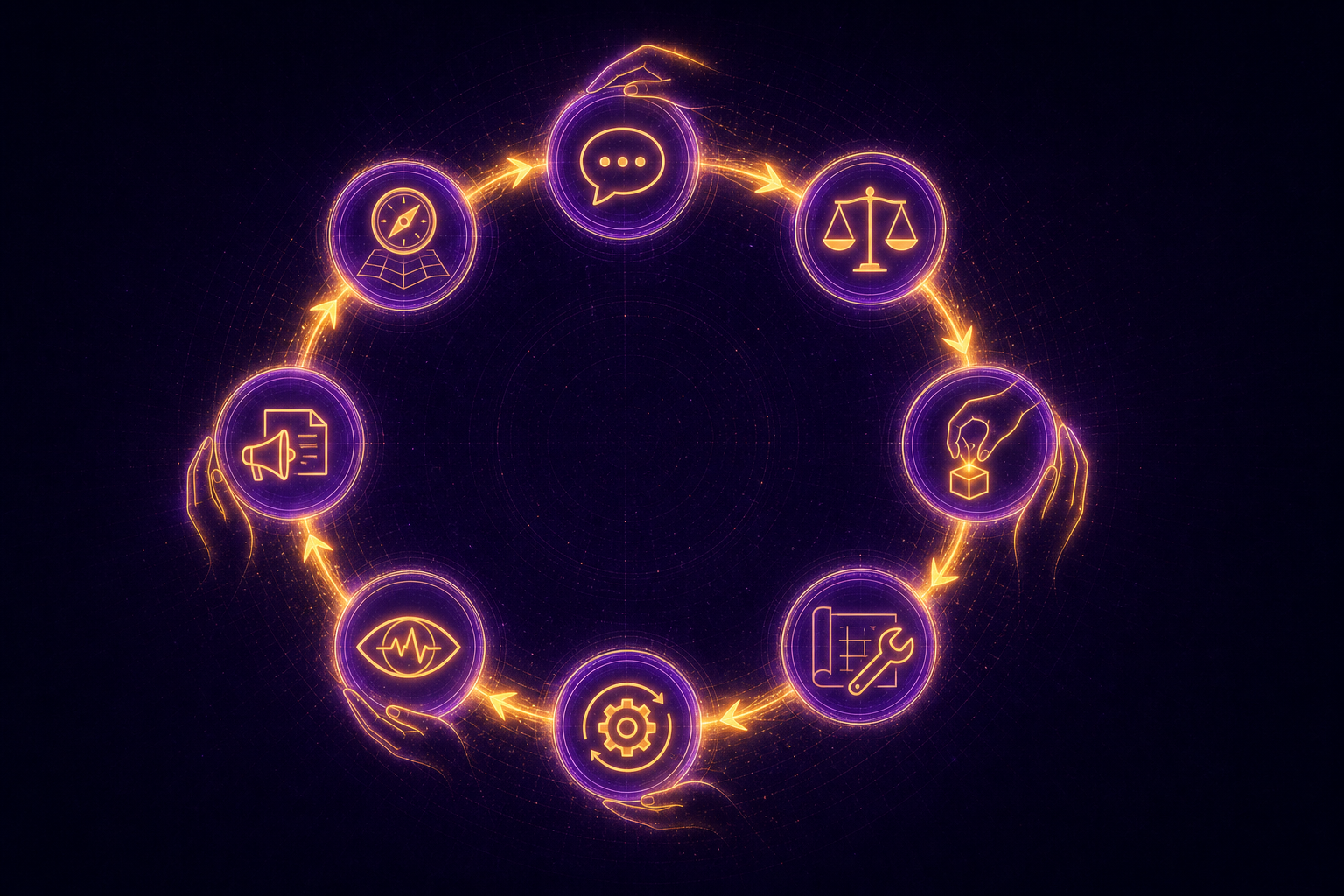
The thing that makes it a system rather than a shelf of gadgets is that it's built around a single loop. Once you see the loop, the place stops looking like a toolbox and starts looking like an organism.
The loop is: intake → judge → claim → build → operate → observe → tell → plan — and then round again. An idea comes in, gets a fair hearing, gets claimed by a team that wants it, gets built, runs in production, gets watched, gets its story told, and everything learned flows back into what we take on next.
The rule that runs through every stage is the same one from Episode 0: AI does the overhead, humans keep the judgement. The capturing, the chasing, the documenting, the reporting, the box-ticking — all handed to AI. The calls that actually matter — which ideas are worth doing, how to build them, when something's good enough to ship — kept firmly human. That single division of labour is the whole philosophy, applied over and over, at every point in the loop.
The organs, mapped
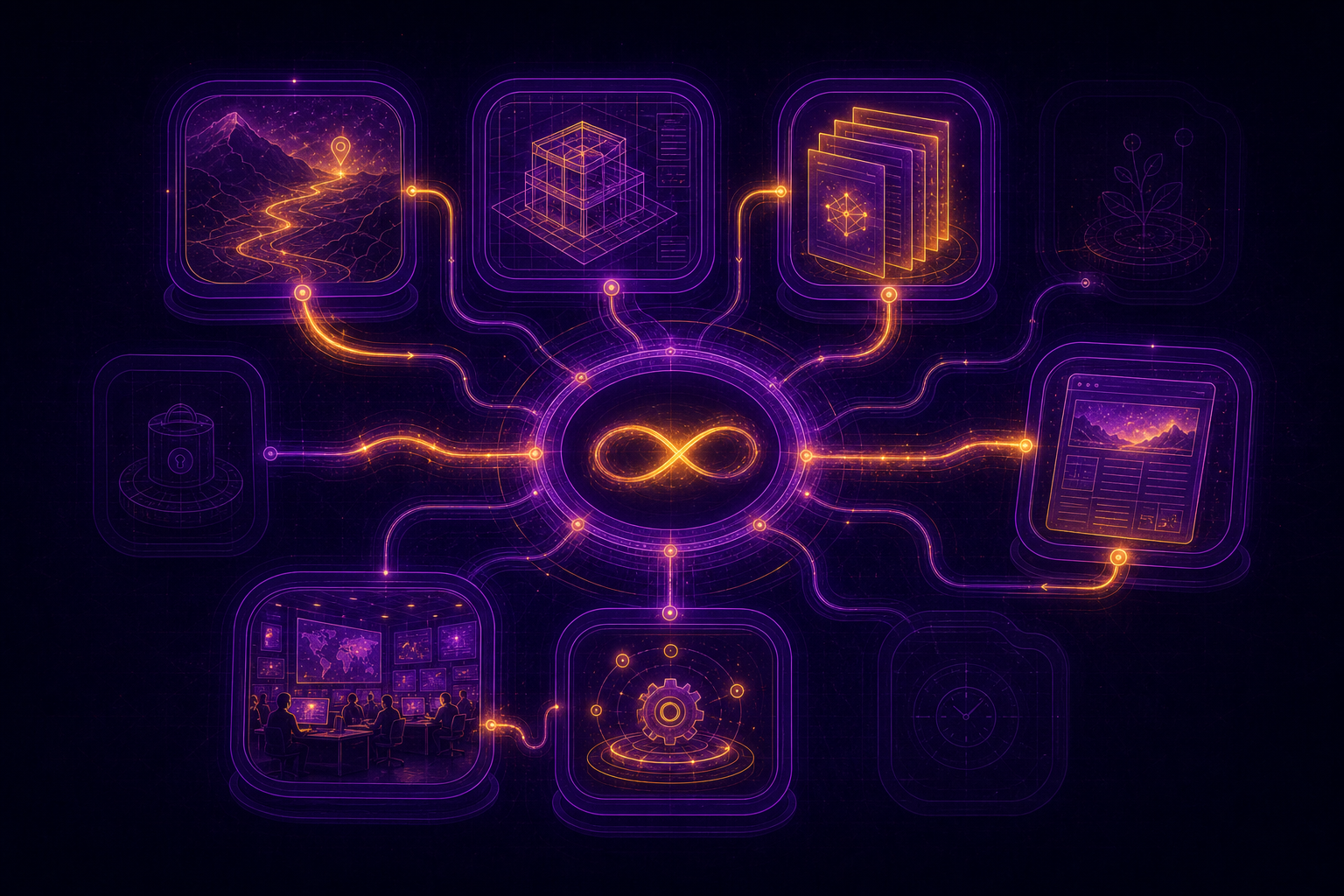
Here's where the series clicks into place. Every platform you've read about is an organ sitting at a point on that loop. Some are live today; some are still being built, and we'll say plainly which is which — because pretending a plan is a product is exactly the kind of dishonesty this whole operating system is designed to prevent.
One loop, its organs
Where each platform in the series sits on the loop — and whether it's live today or still being wired in.
Why it's an operating system, not a toolbox
Three things turn that collection of organs into one system. They're worth naming, because they're the difference between "a company with a lot of AI tools" and "a company running on an operating system."
One — the output of each stage is the input of the next. This is the current that runs through the whole body. The knowledge (the map) feeds the design. The design becomes a spec. The spec feeds the build. The build writes its documentation back into the knowledge. The knowledge feeds the weekly brief. The brief feeds the planning. Nothing is a dead end; every stage hands something real to the one after it. That's what a loop is, and it's why the parts compound instead of just accumulating.
Two — it runs itself on itself. This is the quietly astonishing part. The estate documents itself (the Living Map). Progress reports itself every Friday, with nobody chasing. The company reads itself back in a weekly brief (Vantage). And the work markets itself — the series you're reading was produced by one of the organs. A self-documenting, self-reporting, self-marketing system. The overhead that used to need people isn't reduced; it's largely absorbed by the system doing it to itself.
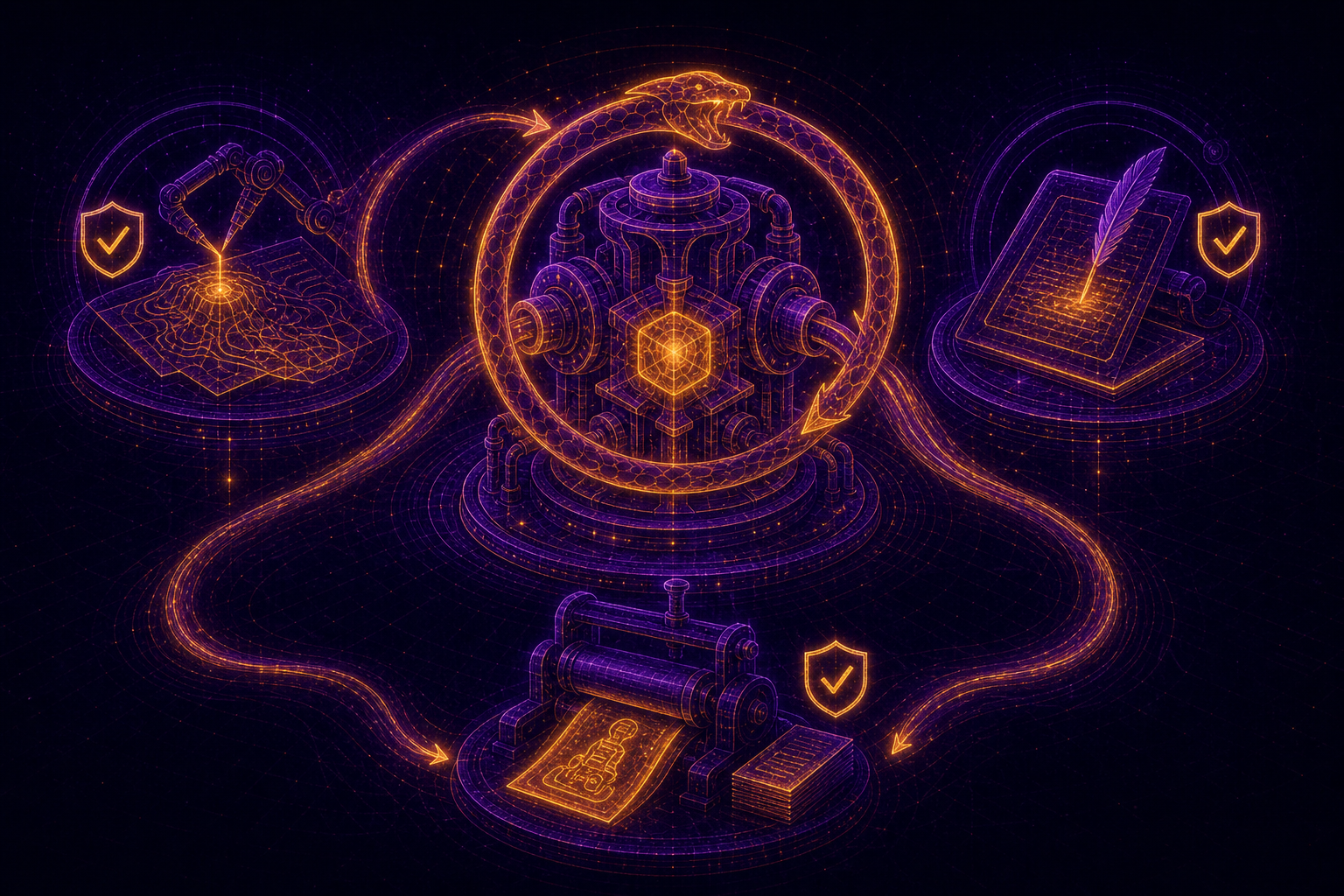
Three — the same honesty pattern runs through all of it. Look closely and every organ carries the same guardrails. Human-in-the-loop on the calls that matter — a person signs off what Nexus indexes, what the architect designs, what the forum approves. And structural safety, built in rather than promised: access control so Nexus can't leak (Ep08), a no-names rule so Vantage can't surveil (Ep10), a Skeptic so the Marketing Engine can't hype (Ep13), and a verify-don't-assert discipline on every number across the whole series. The trust isn't a policy bolted on top. It's designed into each organ, the same way, on purpose.
One honest word
The temptation with a capstone is to present a finished, gleaming, twelve-module machine. It isn't that, and we won't pretend. This quarter the department has twelve connected platforms in flight — in flight, meaning several are live and in real use, and several are still being built. Six of the organs in this series are live today; the rest are on the way, and we've marked them as coming rather than done everywhere above.
We're also publishing this capstone ahead of a few of its own constituent episodes, on purpose — because the shape of the system is worth seeing now, even while some organs are still being wired in.
What's true today is the part that matters: the loop is real, the current between the stages is real, and the system already does meaningful work on itself. The finished, all-twelve version is the thing we're building toward, not the thing we're claiming.
Where it's going
The direction is to fill in the missing organs and tighten the loop until the seams disappear — a front door that files straight to the register, a design that hands cleanly to a coding agent, a build that writes its own learnings back into the map without anyone remembering to, an operate-and-listen layer that feeds the weekly brief automatically. Fewer gaps between knowing, deciding, building and learning. And the same move Vantage already made — taking the "read everything, answer honestly" trick into one department's hard question at a time — is the pattern for the whole OS: point the operating model at the next problem, and the next.
The leverage
The single most important line in this series was in its first episode: if the admin of innovation costs nothing, the binding constraint on how much innovation an organisation can run is no longer coordination overhead — it's the quality of the ideas and the judgement applied to them. The Innovation OS is that idea at portfolio scale. Because capture, design context, documentation, reporting and even storytelling are largely absorbed by the system, the department can carry far more in flight than its headcount would historically allow, progress is always visible without anyone producing it, and — crucially — the model is repeatable. This isn't a one-off heroics story; it's an operating system you can point at the next problem. The question to carry into planning isn't "which of these tools should we invest in?" It's "where else in the business would this same loop pay for itself?"
This is how your idea travels now
If you've ever had a good idea die in an inbox, this is the whole path it travels instead. You have a conversation, and it lands on the board. A human forum actually looks at it within the week. If it's backed, a team can pull it and build it — designing against a workspace that knows the whole estate, drawing on a knowledge base that only shows what you're allowed to see, shipping to a production standard. Once it's live, it documents itself, reports its own progress, gets read in the weekly brief, and — if it's worth telling — gets its story told. You don't chase any of it. That's the operating system we built. Bring it the next idea.